Essential Materials for Golf Green Construction
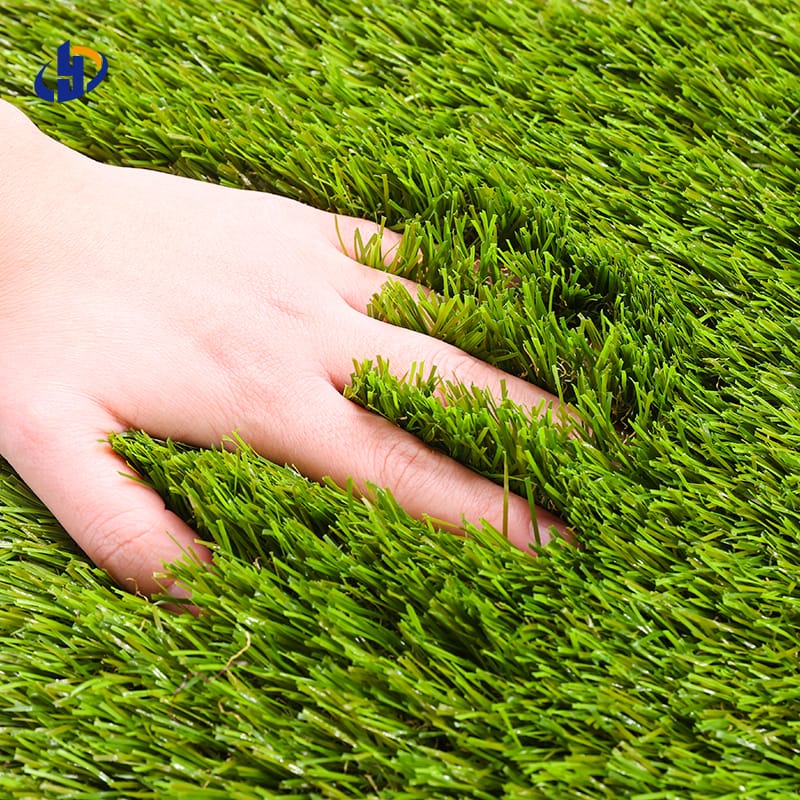
The Evolution & Industrial Landscape of Artificial Grass in Golf Putting Green Construction
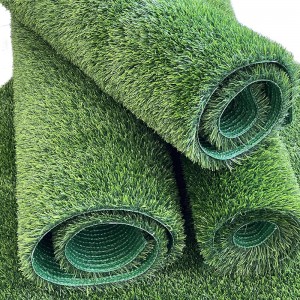
The global sports infrastructure sector is experiencing a monumental paradigm shift, particularly in the domain of golf course design and maintenance. Traditionally, golf putting greens demanded intense agronomic care, requiring hundreds of thousands of gallons of water, constant chemical treatment, and specialized mowing machinery to maintain a consistent Stimpmeter reading. Today, Artificial Grass For Golf Putting Green Construction has emerged as a technologically superior, ecologically sustainable, and financially viable alternative for commercial, municipal, and residential installations.
Modern synthetic putting greens are no longer simple carpeted surfaces. They represent highly engineered systems composed of advanced polymers, specialized infill matrices, and sophisticated sub-base designs. As urban spaces shrink and the demand for low-maintenance, year-round sports facilities grows, developers, landscape architects, and golf course operators are turning to high-performance synthetic turf systems. These systems are designed to replicate the true roll, ball-bounce resilience, and energy absorption of natural bentgrass greens, offering professional-grade playing conditions under any weather conditions.
Deep Application Scenarios for Synthetic Golf Greens
The versatility of synthetic putting green turf allows it to transcend traditional golf course boundaries, opening up diverse commercial, municipal, and private application scenarios:
1. Professional Golf Academies & Training Facilities
For elite training centers, consistency is paramount. Artificial putting greens provide a stable, unchanging platform for players to practice their short game. Because synthetic turf does not develop grain patterns or divots over time, coaches can analyze putts with high-precision camera systems and launch monitors under controlled variables. The integration of dual-density turf allows installers to dial in specific Stimpmeter speeds (ranging from 9 to 13) by adjusting the volume and compacting density of the silica sand infill.
2. Commercial Leisure, Hospitality & Rooftop Greens
Hotels, resorts, and corporate offices are increasingly integrating mini-golf courses and putting greens as premium amenities. Rooftop installations are particularly challenging for natural grass due to weight limits, soil depth requirements, and irrigation logistics. High-quality artificial turf, paired with lightweight aggregate sub-bases or draining cellular grids, enables the construction of stunning, functional rooftop putting greens that elevate property value and provide unique recreational spaces for guests and employees.
3. Indoor Golf Simulators & Residential Entertainment Hubs
The residential sector has seen an explosion in custom backyard putting greens. Homeowners can design complex layouts featuring multiple cups, subtle breaks, bunkers, and surrounding fringe turf. Indoors, synthetic turf serves as the critical floor covering for high-end golf simulator rooms. It must be resilient enough to handle repeated iron impacts while remaining smooth enough to ensure clean ball return to the player.
4. Municipal Parks & Public Adventure Golf Courses
Local municipalities are utilizing artificial turf to build durable, low-cost community putting greens and adventure golf courses. These installations withstand heavy foot traffic, resist vandalism, and remain playable immediately after heavy rainfall, providing communities with sustainable outdoor recreation without draining public maintenance budgets.
Why Partner with WHDY?
Professional Design
Good Quality
Various Products
Technical Guide: Sub-Base Construction for Synthetic Putting Greens
The longevity and playability of an artificial putting green depend 80% on the sub-base engineering. Unlike standard landscape turf, a golf green requires a perfectly stable, contour-retaining, and free-draining foundation. Below is the industrial standard construction sequence:
Step 1: Excavation and Site Preparation
The construction area is excavated to a depth of 100px to 200px, removing all organic matter, sod, and loose soil. The subgrade is then compacted using a heavy-duty vibratory plate compactor to prevent future settling.
Step 2: Weed Prevention & Sub-Base Stabilization
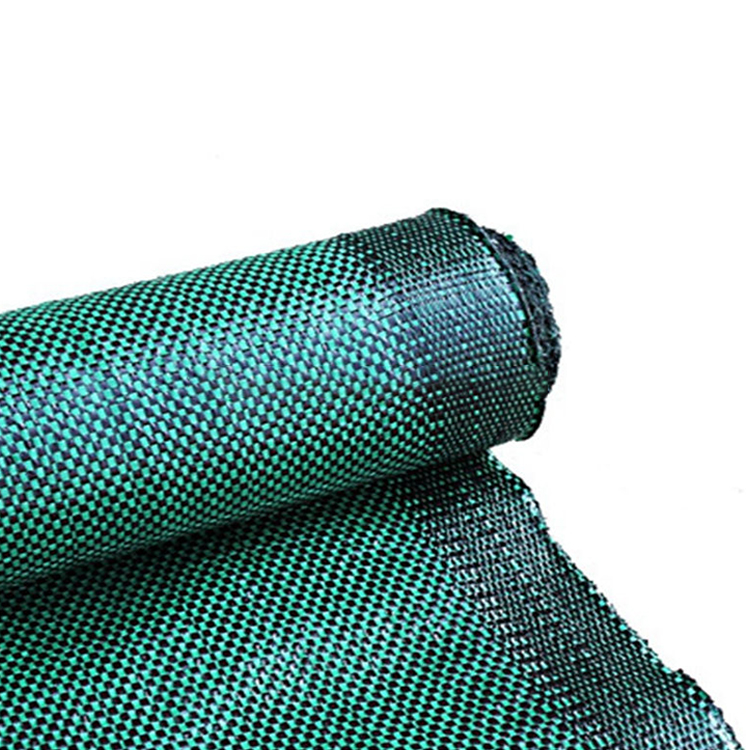
To prevent weeds from penetrating the turf seams and to stabilize the soil, a high-performance geotextile layer, such as our Black and Green PP Woven Fabric Weed Mat, is installed across the entire excavated area. This layer allows water to drain freely while keeping the aggregate base separate from the subgrade soil.
Step 3: Aggregate Base Layer Placement
A layer of crushed stone (typically Class II road base or 19mm crushed aggregate) is spread to a depth of 75px to 100px. This layer provides structural integrity. It is graded, wet down, and thoroughly compacted. Next, a finer 6mm crushed stone dust or decomposed granite layer (25px to 50px) is applied. This fine layer is crucial for sculpting the subtle breaks, slopes, and contours of the putting green.
Step 4: Cup Installation & Turf Fitting
Golf cups are set in concrete sleeves within the sub-base prior to turf installation. Once the base is perfectly smooth and compacted, the synthetic green turf is rolled out, stretched, and seamed together using high-strength turf adhesive and seaming tape. The turf is then cut to fit the exact shape of the green and secured around the perimeter.
Step 5: Infill & Speed Calibration
A specialized, rounded silica sand infill is evenly distributed across the green using a drop spreader. The sand is brushed into the turf fibers using a power broom. This infill keeps the fibers upright, protects the backing from UV damage, and provides the ballast needed to hold the green in place. By adjusting the depth of the sand, installers can fine-tune the green's speed to match the client's preference.
Company Profile & Manufacturing Excellence
Weihai Deyuan Network Industry Co., Ltd. (WHDY) is an experienced company which focuses on the trade of Artificial Grass and Artificial plants. The mainly products are Landscaping Grass, Sports Grass, Artificial Hedge, Expandable willow trellis. Our headquarters of import and export company located in Weihai of Shandong Province, China. WHDY has two main cooperative Production Plants zone. One is located at Hebei Province. The other one located at Shandong Province. In addition, our cooperative factories all over Jiangsu, Guangdong, Hunan and other provinces.
To design and provide you with diversified and stable supply of goods is the basis and advantage of our long-term cooperation. All departments cooperate well with production department and having smooth link up, which can give our clients nice service and shorten production time. We have business in EMEA, America, and South-east Asia etc. WHDY adheres to faith that clients are first and has always been focusing on different marketing solutions and designs to meet the unique needs of each different market to help its clients to gain the maximum benefit that they deserve by cooperating with a top rank manufacturer.
Quality Products: Imagine the punishment our synthetic turf fields take on any given game day. At any of the number of synthetic grass baseball, football, and athletic fields installed around the world. WHDY continues to be the number one choice of playing field grass over the last 10+ years. WHDY Lawn is known for beauty, quality and ability to endure even the harshest punishment athletes can unleash.
The chairman of the company has been resident overseas for more than ten years, and now some employees are still resident overseas. Our rich overseas experience enables us to have professional design for product features required by different regions. Artificial lawn has gone through four stages of development since its birth. At present, the products of WHDY are in the fourth stage and are constantly innovating, and we hope to make breakthroughs in biodegradable materials in the future.
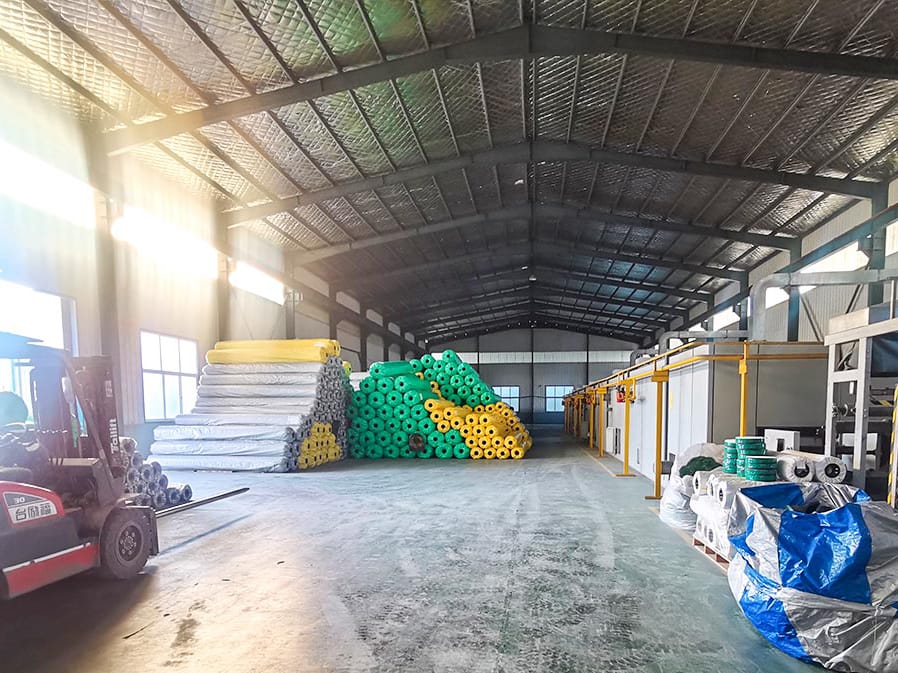
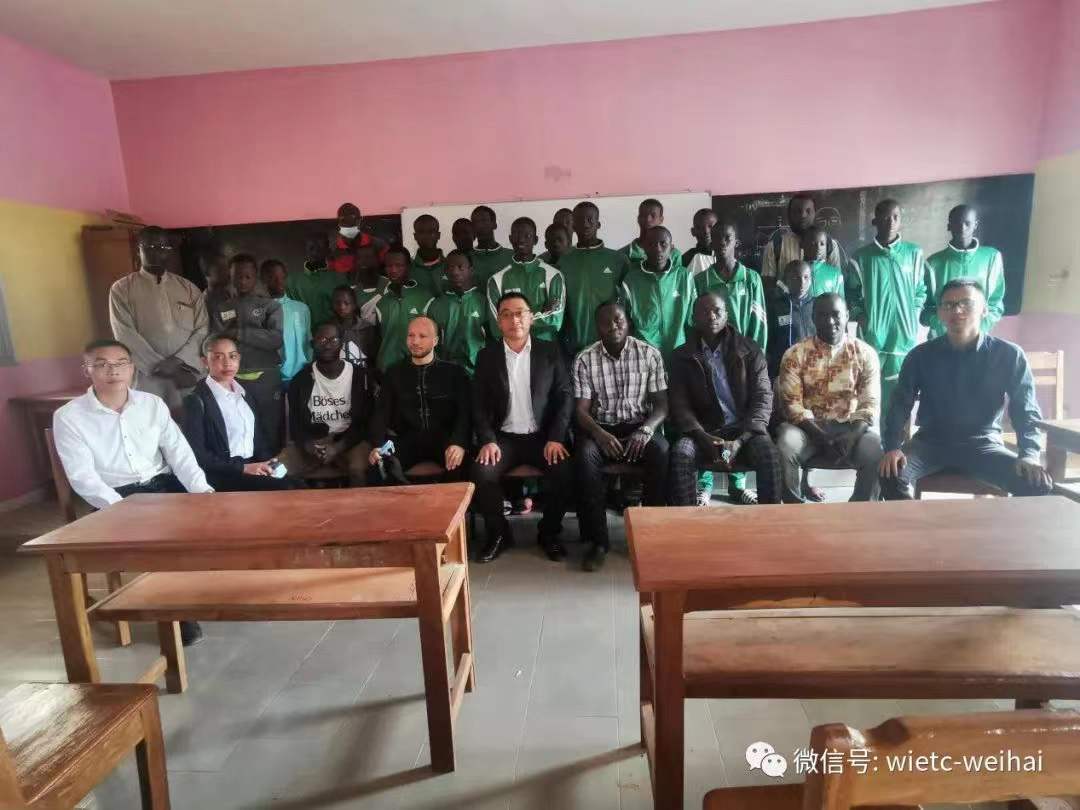
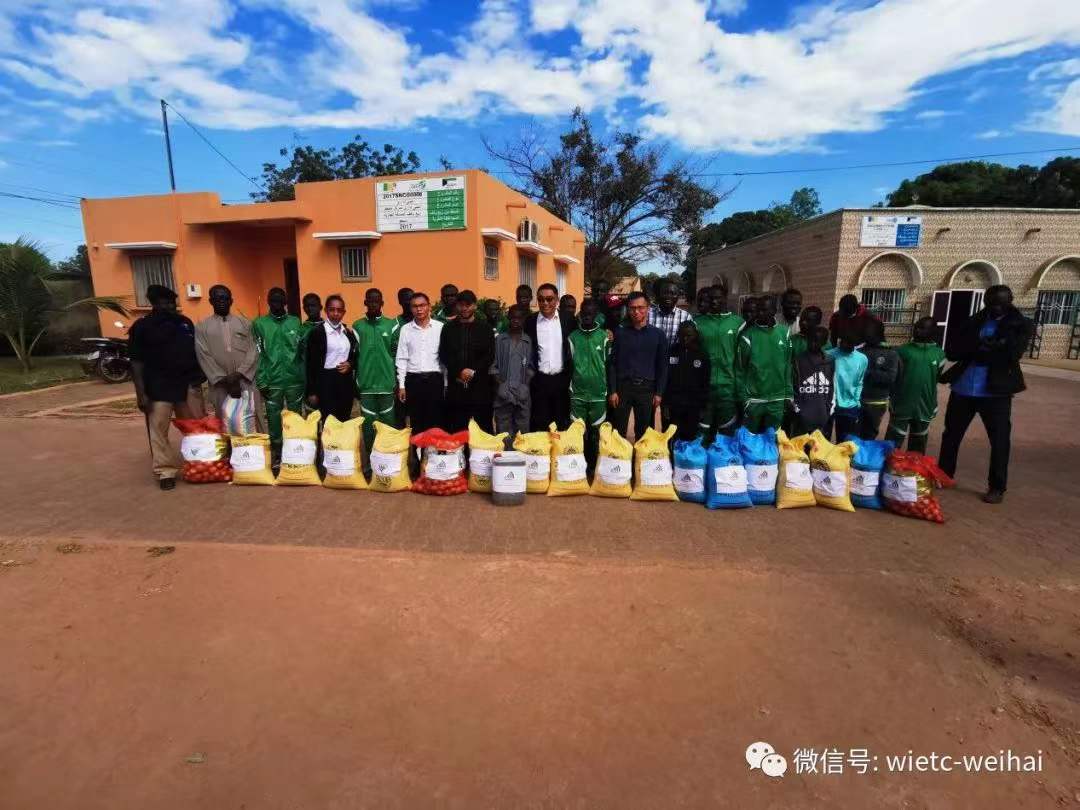
Factory Tour Gallery
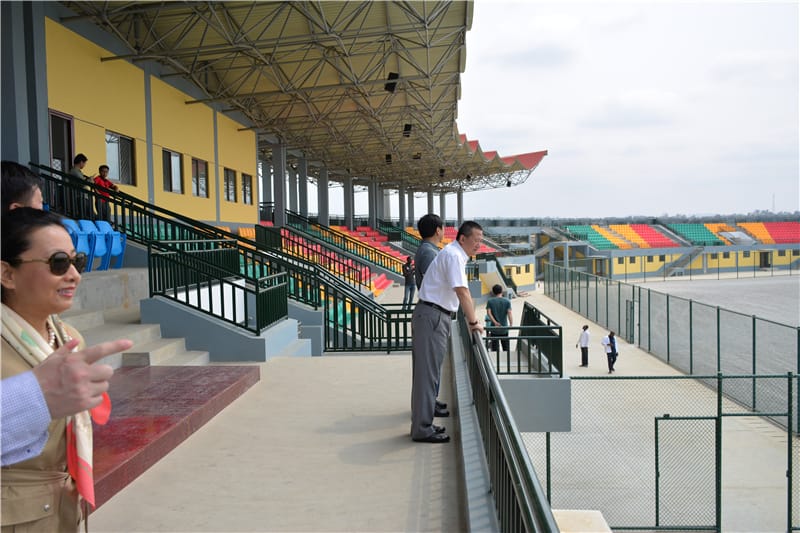
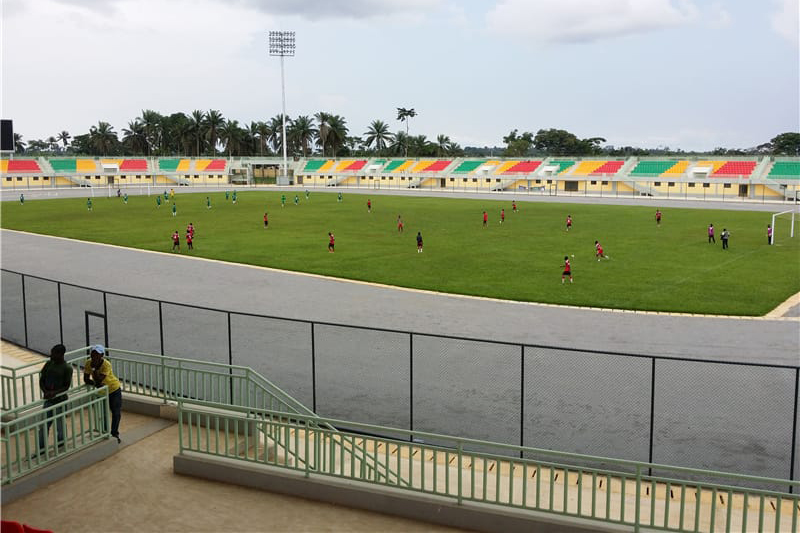
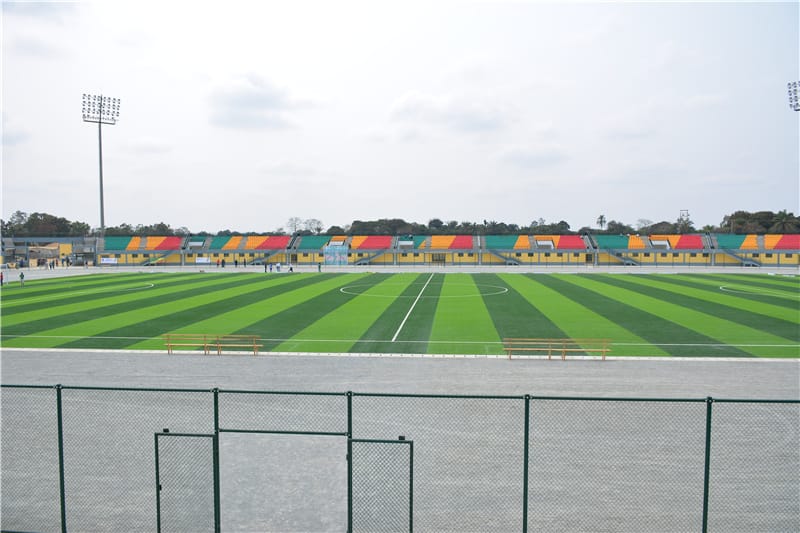
Future Trends in Golf Green Artificial Grass Manufacturing
As the industry marches forward, several key technological trends are shaping the future of synthetic golf green production:
- Biodegradable & Recyclable Polymers: In alignment with global sustainability goals, manufacturers are actively researching bio-based resins and fully recyclable backing systems. The objective is to design turf that can be completely re-extruded into new industrial products at the end of its lifecycle, reducing landfill waste.
- Thermal Reduction Technologies: Synthetic turf can absorb heat during peak summer months. Advanced cooling technologies, such as infrared-reflective pigments integrated directly into the yarn, help lower surface temperatures, ensuring a comfortable playing experience even in hot climates.
- Non-Infill Systems with High-Textured Fibers: The development of highly dense, texturized nylon and polyethylene fibers is paving the way for non-infill putting greens. These systems eliminate the need for silica sand top-dressing, simplifying maintenance and reducing the risk of infill displacement during heavy rain storms.
- Smart Sensor Integration: The intersection of AI and sports infrastructure is introducing smart putting greens. Embedded underlayment sensors can track ball speed, roll trajectory, and impact forces, providing real-time data to golfers looking to refine their technique.